View the full infographic here.
Our 2025 Watch Study takes a closer look at the fascinating world of watch collectors: what drives them, how they choose their timepieces, how they care for them, and what trends are shaping the industry. Drawing on insights from our study, we explore what makes a collector tick—and why specialized insurance is essential for treasured pieces.
Watches have always been more than just tools for telling time. They’re markers of milestones, heirlooms, status symbols, and expressions of personal style. For collectors, they’re also passions—pursuits that reflect deep knowledge, emotional connection, and meticulous care.
Watch collectors come from all walks of life—business professionals, artists, engineers, even students—but they share a few core traits: a deep appreciation for craftsmanship, an eye for detail, and a fascination with the mechanical beauty of horology.
Many collectors start with a single gift or impulse buy, only to find themselves drawn into the history, engineering, and variety of watches. Some focus on vintage models, others on the latest innovations in smartwatches. Some chase limited-edition releases, while others are loyal to a single brand.
According to our recent study, most collectors are older, married men, and fall into one of a few distinct categories:
- Aesthetic enthusiasts: Drawn to the design, materials, and overall elegance of a watch.
- Mechanical purists: Fascinated by movement complications, calibers, and inner workings.
- Brand loyalists: Dedicated followers of iconic manufacturers like Rolex, Omega, or Patek Philippe.
- Trend chasers: Focused on new releases, hype culture, and resale value.
- Sentimental collectors: Acquire watches tied to memories, life events, or family heritage.
Based on our findings, 54% of watch collectors cite the feeling of wearing a nice watch as a primary driver. For some, a watch purchase is spontaneous—a beautiful piece spotted while traveling or browsing online. For others, it’s a carefully researched decision that could take weeks or months.
When do people buy watches?
Life milestones
Graduations, promotions, anniversaries, or major life changes often spark a watch purchase. A classic timepiece is a popular gift to commemorate success or transition.
Emotional significance
Watches often become symbolic. A father might pass down his daily wearer. A spouse may give a limited-edition piece as a wedding gift. These watches carry stories.
Brand or model launches
Limited editions, heritage reissues, or new complications can create buzz. Watch fans often track brand calendars closely, waiting for a release.
Investment appeal
As certain models appreciate in value, more collectors are drawn to watches as assets. Especially in the luxury segment, timepieces are increasingly seen as investment-grade goods.
Peer influence & social media
Instagram, YouTube reviews, and online forums like Watchuseek or Hodinkee have become powerful influencers in the collector space.
Types of watch collectors
There’s no one-size-fits-all when it comes to collecting. But based on behavior, watch collectors often gravitate toward certain styles or types of timepieces. Some major categories include:
Luxury mechanical watches
The heart of many collections. Think Rolex Submariner, Omega Speedmaster, or Audemars Piguet Royal Oak. These are prized for their engineering, prestige, and longevity.
Vintage watches
Collectors often seek out timepieces from the mid-20th century, when mechanical innovation peaked. Brands like Longines, Heuer, and early Seiko divers are increasingly popular.
Tool watches
Originally built for professionals—divers, pilots, or military use—these are loved for their ruggedness and utility. Examples include the Breitling Navitimer or the Tudor Pelagos.
Dress watches
Sleek, minimalist designs meant for formal wear. Often ultra-thin and elegant, these include models from Jaeger-LeCoultre, Vacheron Constantin, and Cartier.
Smartwatches
An emerging category in collections, especially among tech-savvy or fitness-oriented buyers. Some collectors now rotate between a mechanical daily wearer and an Apple Watch or Garmin.
Popular brands and iconic models
Certain brands enjoy almost mythical status in the watch world. In our study, 56% of watch collectors said they owned a Rolex, with some spending over $50,000 on their pieces!
Here are the most popular brands among collectors:
- Rolex – The crown jewel. Known for timeless style, strong resale value, and unmatched brand recognition.
- Omega – The “moonwatch” Speedmaster and the Seamaster diver lines are collector staples.
- Patek Philippe – High horology with heritage. Pieces often passed down generations.
- Audemars Piguet – Particularly the Royal Oak, a symbol of haute horology and bold design.
- Tudor – Rolex’s younger sibling, offering quality and heritage at a more accessible price.
- Grand Seiko – Admired for its finishing, precision, and Japanese craftsmanship.
We also saw increasing interest in independent brands like F.P. Journe, H. Moser & Cie, and Ming, and in microbrands such as Halios, Baltic, and Zelos—especially among younger collectors.
Watch collector habits & behaviors
So, what does a typical collector do once the watch is on their wrist—or in the safe? Our study revealed some telling patterns.
Rotating the collection
Most collectors don’t just wear one watch. They rotate based on occasion, mood, season, or outfit. Many assign roles: a daily beater, a formal piece, a weekend watch, etc.
Documenting and cataloging
Many collectors log their collection in spreadsheets or use dedicated apps like WatchBox or Chrono24 to track value, service history, and provenance.
Social sharing
Watch Instagram (“#watchfam”) is a tight-knit community. Collectors often post daily wrist shots, discuss purchases, and connect through online groups and forums.
Storing and displaying
Storage is an underrated part of collecting. Enthusiasts often invest in:
- Watch rolls or boxes
- Winders for automatics
- Humidity-controlled safes for vintage or high-value pieces
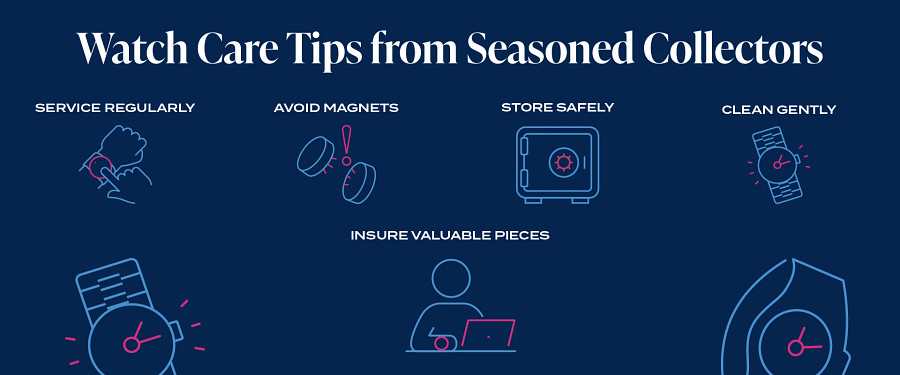
Watch care tips from seasoned collectors
Even the most beautiful watch loses its charm if poorly maintained. Our survey revealed a gap in proper maintenance knowledge, so here are a few friendly reminders from long-time collectors:
- Service regularly: Every 3–5 years is typical for mechanical watches. Quartz watches need battery changes but also benefit from cleanings.
- Avoid magnets: Magnetic fields (from laptops, phones, etc.) can significantly affect accuracy.
- Store safely: Keep watches in dry, temperature-stable environments. Avoid keeping all your pieces in one location.
- Clean gently: Use a microfiber cloth for daily cleaning. For deeper cleans, use a soft brush and mild soap, especially on metal bracelets.
- Insure valuable pieces: Especially if your collection is growing. Many underestimate the replacement cost of rare or vintage models.
Protect your watches with a Jewelers Mutual Insurance policy
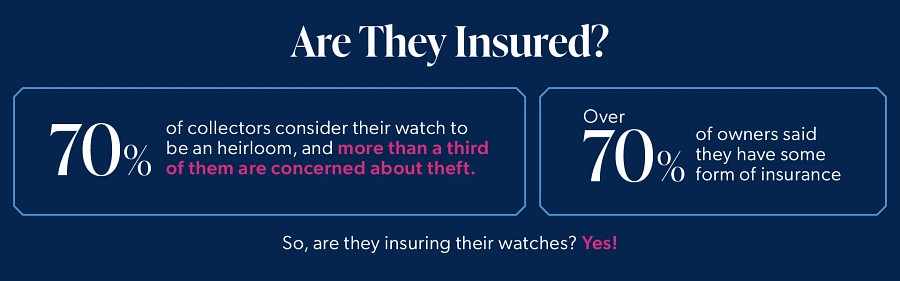
Watches aren’t just accessories. For collectors, they’re pieces of history, works of art, and reflections of identity. Each has a story—whether it’s a watch passed down from a grandparent, a first major purchase, or a long-awaited grail finally acquired.
As we discovered in the Jewelers Mutual watch study, 83% of watch collectors own multiple watches. Collecting is about more than possession—it’s about passion. It’s about learning, connecting, and sharing in a community that values precision and legacy.
The Jewelers Mutual study was conducted in June 2025 via an online survey through Qualtrics. A sample of over 1,500 adult watch owners in the U.S. aged 18+ who were responsible for making insurance decisions in their household were recruited via an online research panel and surveyed via online self-completion.